POPULAR 2026 | RESEARCH LIBRARY
Mazdutide
An evidence-based, plain-language information page on this GLP-1/glucagon dual agonist, its Chinese approvals, metabolic research, uncertainties and South African context.
Contents
What mazdutide is
Important information and disclaimer
Approved and researched uses
Potential future uses
How it works
What evidence has found
Current regulatory status
South African context
How it compares
Risks and uncertainties
Treatment safeguards
Common questions
Join for updates
Sources
Important information and disclaimer
This page is for general education. Mazdutide is a prescription medicine approved in China for specified indications, but it is not thereby approved in South Africa, the United States, Europe or every other jurisdiction. This page does not diagnose obesity or diabetes, recommend treatment, or provide personal dosing, reconstitution, injection or importation instructions.
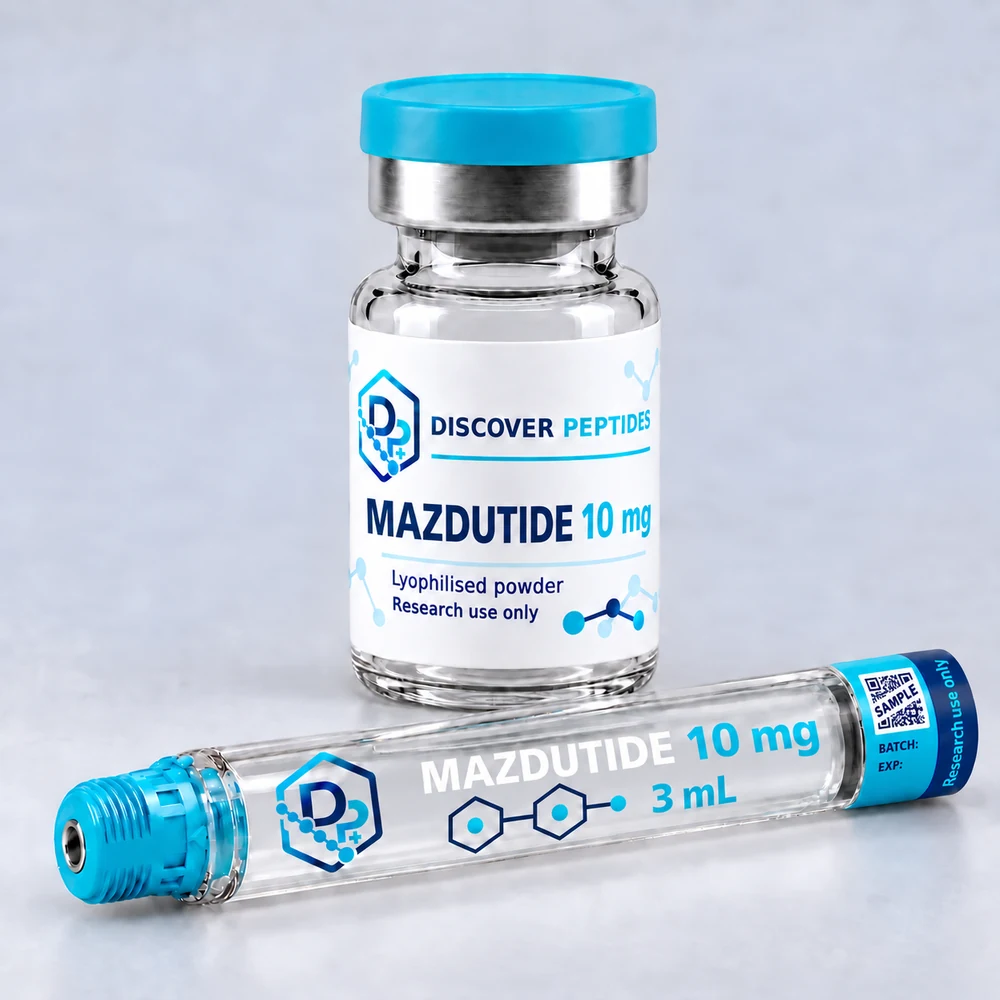
A vial labelled ‘mazdutide’, ‘IBI362’, ‘LY3305677’, ‘GLP-1/glucagon dual agonist’ or ‘research grade’ is not thereby equivalent to the medicine evaluated and authorised in China. Identity, peptide content, purity, sterility, excipients, concentration, device compatibility, stability and cold-chain history may be unknown.
Persistent severe abdominal pain, repeated vomiting, inability to keep fluids down, severe weakness, marked hypoglycaemia, severe allergic symptoms or collapse requires urgent medical assessment. Mazdutide is not insulin and must not replace insulin in type 1 diabetes.
What is mazdutide?
Mazdutide is a long-acting synthetic analogue of mammalian oxyntomodulin designed to activate both the GLP-1 receptor and the glucagon receptor. It was developed from a programme originating with Eli Lilly and is developed and commercialised in China by Innovent Biologics. It has also been known by the development codes IBI362 and LY3305677.
Names and products that must not be confused
What is mazdutide approved or researched for?
China approved mazdutide in June 2025 for long-term weight management in adults with obesity or overweight under the authorised criteria, and in September 2025 for glycaemic control in adults with type 2 diabetes. The precise Chinese product information governs eligible patients, contraindications, strengths, monitoring and use within China.
Chronic weight management in defined adults
Glycaemic control in adult type 2 diabetes
Effects on waist circumference and cardiometabolic risk markers
Liver-fat reduction and metabolic liver disease
Prediabetes progression and possible diabetes remission strategies
Cardiovascular, kidney and atherosclerosis outcomes under continuing research
Approval in one country is meaningful regulatory evidence, but it does not transfer automatically to another country and does not validate informal bulk peptide or online vials.
Other potential uses—only if future research confirms them
Research programmes are examining prediabetes, metabolic dysfunction-associated steatotic liver disease, coronary atherosclerosis, weight-related complications and comparative metabolic outcomes. New registered studies include people previously treated with semaglutide and trials focused on diabetes remission, but registration is not proof of benefit.
Claims about universal fat loss, selective visceral-fat removal, anti-ageing, athletic performance or safe combination with other incretin medicines remain unsupported unless confirmed in indication-specific trials and regulatory review.
How does mazdutide work?
GLP-1 receptor component
GLP-1 receptor activation can increase glucose-dependent insulin secretion, reduce inappropriate glucagon release when glucose is elevated, slow gastric emptying and reduce appetite. These actions contribute to glycaemic control and lower energy intake.
Glucagon receptor component
Glucagon-receptor activation is intended to increase energy expenditure and influence liver and lipid metabolism. Because glucagon can also raise glucose, the therapeutic design depends on a carefully balanced receptor profile rather than assuming that more glucagon activity is always beneficial.
Long-acting molecular design
Mazdutide contains modifications that prolong exposure for weekly administration in its authorised programme. Results depend on the exact molecule, formulation and manufacturing controls; they cannot be assumed for a loosely labelled peptide vial.
What has evidence found?
Weight management: GLORY-1
The Phase 3 GLORY-1 trial in Chinese adults with obesity or overweight found clinically meaningful average weight reduction and improvement in several cardiometabolic measures compared with placebo. The population, dose programme, lifestyle support and authorised product context matter when interpreting the result.
Type 2 diabetes: DREAMS programme
Phase 3 studies reported improvements in HbA1c and body weight in Chinese adults with type 2 diabetes, supporting the second Chinese approval. Comparative findings against dulaglutide or semaglutide are specific to the studied designs and should not be converted into blanket superiority claims.
Limits of generalisability
Most pivotal evidence has been generated in Chinese participants. This is high-value human evidence, but broader ethnic, healthcare-system and long-term post-marketing experience remains less mature than for older globally used GLP-1 medicines. Cardiovascular outcome evidence is still developing.
Evidence and regulatory position in 2026
Current regulatory and South African context
Mazdutide’s approvals are from China’s National Medical Products Administration. No FDA, EMA or publicly identified SAHPRA registration was found in this review. South African use, importation, manufacture, compounding, advertising and supply must be assessed under local law and current SAHPRA records; Chinese approval does not create a South African marketing authorisation.
SAHPRA and the South African Pharmacy Council warned in 2026 about unlawful manufacture and supply of unregistered GLP-1/GIP and related peptide products. Online availability, a Chinese brand photograph, a prescription or a certificate of analysis does not establish lawful South African supply or finished-medicine equivalence.
How mazdutide compares with related metabolic peptides
Known risks, contraindications and uncertainties
The definitive safety instructions are those of the authorised Chinese product. Published trials suggest a gastrointestinal adverse-effect pattern broadly expected from incretin-based treatment, while the added glucagon component and shorter post-marketing history require continuing surveillance.
Nausea, diarrhoea, vomiting, reduced appetite, constipation and abdominal discomfort may occur.
Dehydration from persistent gastrointestinal symptoms can worsen kidney function.
Pancreatitis, gallbladder disease, hypoglycaemia with other glucose-lowering medicines and hypersensitivity require clinical attention.
Rapid glucose improvement may affect diabetic retinopathy risk in susceptible patients.
Delayed gastric emptying can affect oral medicines and matters before anaesthesia or deep sedation.
Pregnancy, breastfeeding, severe gastrointestinal disease and complex endocrine disease require specialist assessment.
Long-term cardiovascular, pancreatic, thyroid, liver and rare-event safety outside the Chinese post-market setting remains less mature.
Combining mazdutide with other GLP-1, GIP or glucagon-pathway drugs lacks established safety and benefit.
Treatment and measurement safeguards
This page deliberately does not provide a dose schedule, pen-click or syringe-unit conversion, vial reconstitution, microdosing, switching equation, import route or compounded-product recipe. Chinese strengths or trial quantities cannot be transferred to an unidentified vial or South African patient.
Appropriate evaluation may include confirming diagnosis and lawful product, glucose status, kidney and liver disease, eye history, gallbladder or pancreatic history, gastrointestinal disease, other medicines, pregnancy plans, nutritional risk and upcoming anaesthesia. Monitoring should evaluate clinical benefit, adverse effects, hydration, glycaemia, body composition and function—not scale weight alone.
Common questions
Is mazdutide approved?
Yes in China for specified weight-management and adult type 2 diabetes indications; not globally.
Is it the same as survodutide?
No. Both target GLP-1 and glucagon receptors, but they are different molecules and programmes.
Is it Chinese semaglutide?
No. Semaglutide targets GLP-1 alone; mazdutide is a GLP-1/glucagon dual agonist.
Can it replace insulin?
No. It is not insulin and must not replace required insulin in type 1 diabetes.
Does Chinese approval make online vials legitimate?
No. Approval applies to the authorised product and supply chain, not unrelated material using the name.
Is it registered in South Africa?
No public SAHPRA registration was identified in this review; current status must be verified directly.
Join for research and regulatory updates
Join the future research bulletin for global approvals, comparative trials, cardiovascular, liver and kidney outcomes, South African regulatory changes and product-safety alerts. Subscription does not provide medical advice, prescriptions, supply or personal dosing instructions.
Sources and further reading
Innovent Biologics. NMPA approval announcements for mazdutide in chronic weight management and type 2 diabetes. 2025.
Innovent Biologics. Mazdutide product and development overview. Updated 2026.
Ji L, et al. Once-weekly mazdutide in Chinese adults with obesity or overweight (GLORY-1). Nature Medicine. 2025. PMID 40421736.
Mazdutide: First Approval. Drugs. 2025. PMID 41028652.
ClinicalTrials.gov. NCT07654062, DREAM-PRE: mazdutide in adults with prediabetes.
ClinicalTrials.gov. NCT07657676: mazdutide and coronary plaque in overweight or obesity.
ClinicalTrials.gov. NCT07713992: mazdutide in type 2 diabetes and moderate-to-severe fatty liver disease after semaglutide.
SAHPRA and South African Pharmacy Council. Crackdown on unlawful manufacturing of unregistered GLP-1/GIP medicines. 2026.
Editorial method: regulator and developer approval records, registered trials and peer-reviewed human studies were prioritised. China-specific approval was kept separate from global and South African status. Review after major regulatory or outcomes changes, and no later than March 2027.



Reviews
There are no reviews yet.